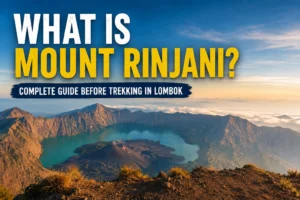
Rinjani trekking training plan is essential if you want to prepare your body for the physical demands of Mount Rinjani trekking. Standing at 3,726 meters above sea level, Mount Rinjani involves long hiking hours, steep ascents, uneven volcanic terrain, and significant elevation gain. A structured training routine can help you build endurance, strengthen your legs, and feel more confident on the trail.
Whether you are planning a summit trek from Sembalun or a shorter crater rim adventure, proper preparation should be part of your itinerary.
Why Do You Need a Rinjani Trekking Training Plan?
Before discussing specific exercises, it is important to understand what makes Rinjani trekking physically demanding. The challenge is not simply walking uphill. You may spend several hours hiking while carrying a daypack and navigating changing terrain.
A good Rinjani trekking training plan therefore focuses on several areas:
- Cardiovascular endurance for long hiking days
- Leg strength for uphill and downhill sections
- Core stability for uneven terrain
- Balance and coordination
- Recovery between trekking sessions
You do not need to become an elite athlete. The goal is to gradually prepare your body for the demands of the trek.
4-Week Rinjani Trekking Training Plan
A four-week program can work as a starting point if you already have a reasonable fitness base. If you rarely exercise or have little hiking experience, consider starting earlier and increasing your training gradually.
1. Week 1: Build Your Fitness Base
The first week of your Rinjani trekking training plan should focus on building a consistent exercise routine rather than immediately pushing your body through intense workouts. At this stage, combine moderate cardio with simple strength exercises to prepare your legs and improve overall endurance. The goal is to make regular physical activity feel comfortable before gradually increasing the intensity in the following weeks.
Your weekly training can include:
- Brisk walking for 30–45 minutes, 3 times a week
- Easy jogging or cycling for 20–30 minutes, 1–2 times a week
- Bodyweight squats, 3 sets of 10–15 repetitions
- Walking lunges, 3 sets of 8–10 repetitions per leg
- Calf raises, 3 sets of 15 repetitions
- One light stair-climbing or hill-walking session
Give yourself enough recovery time between demanding sessions. Building fitness gradually is more beneficial for trekking preparation than suddenly increasing your exercise volume.
2. Week 2: Increase Uphill Endurance
After establishing a basic fitness routine in the first week, the second week can introduce more uphill-focused activities. This stage is particularly important for Rinjani summit training because the trail includes prolonged climbs that require your legs and cardiovascular system to work continuously. Gradually increasing elevation-focused training can help you become more comfortable with sustained uphill movement.
Try adding the following activities to your routine:
- Uphill walking for 40–60 minutes, twice a week
- Jogging or cycling for 30–40 minutes
- Step-ups, 3 sets of 10–15 repetitions per leg
- Bodyweight squats, 3 sets of 15 repetitions
- Walking lunges, 3 sets of 10 repetitions per leg
- Planks, 3 sets of 30–45 seconds
- One longer weekend walk or hike
Stairs and hills are useful additions to your Rinjani hiking training because they allow you to practice maintaining a steady pace while gaining elevation. Focus on controlled movement instead of trying to complete the session as quickly as possible.
3. Week 3: Practice Real Hiking Conditions
By the third week, your Rinjani trekking exercises should become more similar to the conditions you may encounter on the actual mountain. This is the right time to include a longer hike on varied terrain, especially if you have access to hills or trails. Besides improving endurance, the session allows you to test your equipment and learn how your body responds to several hours of continuous activity.
During your longer hiking session, practice: If you are preparing for a multi-day summit trek, your training should include longer hikes, uphill conditioning, and practice carrying a daypack. This preparation can be especially useful for the 3D/2N Summit Sembalun to Senaru itinerary.
- Hiking continuously for around 2–4 hours
- Walking on both uphill and downhill terrain
- Carrying a daypack similar to the one you will use during the trek
- Drinking water at regular intervals
- Eating snacks during longer activities
- Wearing your trekking shoes
- Testing trekking poles if you plan to use them
Use this week to identify anything that could cause problems during your Mount Rinjani trekking experience. For example, uncomfortable shoes, poorly adjusted backpack straps, or clothing that causes irritation are much easier to fix during training than on the actual trail.
4. Week 4: Maintain Fitness and Taper
The final week of your Rinjani trekking preparation should focus on maintaining the fitness you have developed while giving your body enough time to recover. Trying to compensate for missed training with intense workouts at this stage can leave you tired before the trek even begins. Instead, gradually reduce the training load as your departure approaches.
Your final week can include:
- One final longer hike early in the week
- Shorter walks on the following days
- Easy cardio such as light cycling or walking
- Gentle stretching and mobility exercises
- Light strength exercises without pushing to exhaustion
- Reduced heavy leg training several days before the trek
- Adequate sleep and rest before departure
- Consistent hydration and balanced nutrition
The final days are about arriving at the trailhead feeling rested and ready, rather than trying to achieve another major fitness improvement. A proper taper gives your body time to recover from training before you begin your Rinjani adventure.
Read More: Everything You Need to Know About the Sembalun Trekking Route
Rinjani Trekking Exercises to Prioritize
A balanced Rinjani trekking training plan combines cardio with strength and stability exercises. Each type of training supports a different physical demand on the mountain.
1. Cardiovascular Training
Cardio helps you sustain physical activity for extended periods. Brisk walking, jogging, cycling, swimming, and stair climbing can all be useful. For beginners, brisk walking is an accessible starting point because it allows you to increase duration without immediately placing excessive stress on your joints.
2. Leg Strength
Your legs work continuously during both ascents and descents. Exercises such as squats, lunges, step-ups, and calf raises can strengthen the major muscle groups involved in hiking. Focus on controlled movements instead of simply completing as many repetitions as possible.
3. Core Stability
Core exercises can support balance and stability when navigating uneven terrain. Planks, side planks, and controlled single-leg exercises can be incorporated into your weekly routine.
4. Uphill and Downhill Training
Do not focus exclusively on climbing. Descending can also place considerable demands on your legs, particularly after a long ascent. Include stairs, hills, or controlled step-down exercises in your Rinjani fitness training to prepare for both directions.
Rinjani Trekking Preparation Beyond Fitness
Physical conditioning is only one part of Rinjani trekking preparation. Your equipment, route knowledge, logistics, and awareness of current park requirements are equally important. Before departure, check the latest information regarding trail conditions, weather, access, booking procedures, and regulations. Park requirements can change, so current official information should take priority over older trekking guides.
Your basic trekking checklist may include:
- Hiking shoes with good traction
- Comfortable trekking clothes
- Warm layers
- Rain protection
- Headlamp and spare batteries
- Adequate water containers
- Personal medication
- Sun protection
- A suitable daypack
If you are joining an organized trekking package, confirm what equipment, meals, guides, and porter services are included before departure.
How Fit Do You Need to Be for Rinjani?
The fitness level required depends on your route, itinerary, trekking duration, elevation gain, weather, and whether you plan to reach the summit. A summit-focused itinerary generally requires greater endurance and uphill conditioning than a shorter crater rim trek. However, every trekker should be prepared for sustained walking and changing terrain. Most importantly, fitness preparation should support a safe trekking experience rather than encourage you to push through serious physical problems. Follow the instructions of your guide and park authorities during the trek.
Final Rinjani Trekking Preparation Checklist
Once your training is complete, use the final days to prepare rather than attempting to dramatically improve your fitness at the last minute.
Before leaving for Mount Rinjani, make sure you:
- Complete several weeks of consistent training
- Practice at least one longer hike
- Break in your trekking shoes
- Test your backpack and clothing
- Prepare water and hiking snacks
- Review your trekking itinerary
- Confirm your booking and required documents
- Check the latest park regulations and trail conditions
- Get enough sleep before the trek
Conclusion
A practical Rinjani trekking training plan should gradually develop cardiovascular endurance, leg strength, balance, and uphill capacity. Rather than relying on intense workouts immediately before departure, build your fitness consistently and give your body enough time to recover. Good preparation allows you to approach Mount Rinjani trekking with greater confidence while enjoying the landscapes, crater rims, sunrise, and other experiences along the route. If you are planning a Rinjani adventure in Lombok, explore the trekking experiences and itineraries available through Rinjani Hero.
FAQ
1. How long should I train for Rinjani trekking?
Four weeks can be a reasonable starting point for people who already exercise regularly. Beginners or people with limited hiking experience may benefit from starting several weeks earlier.
2. What is the best exercise for Rinjani trekking?
Uphill walking, stair climbing, hiking, and leg-strength exercises are particularly useful. Combining these with cardiovascular training creates a more balanced preparation routine.
3. Do I need to run before trekking Mount Rinjani?
No. Running is not mandatory. Brisk walking, cycling, stair climbing, and hiking can also help develop the endurance needed for trekking.
4. Should I train while carrying a backpack?
Yes. During longer practice hikes, gradually carry a backpack with a similar load to what you expect during the actual trek. Avoid suddenly carrying a heavy pack without prior practice.
5. Can beginners trek Mount Rinjani?
Beginners can consider trekking Mount Rinjani with appropriate preparation and an itinerary that matches their experience and fitness. Always check the latest official park requirements and trail conditions before starting your trek.