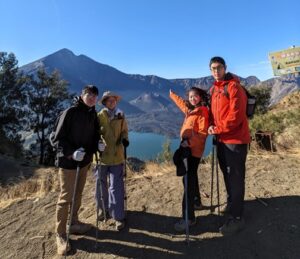
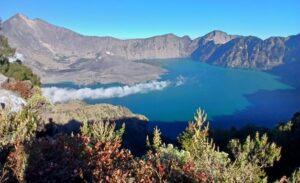
What is Mount Rinjani? Mount Rinjani is an active volcano located on Lombok Island, West Nusa Tenggara, Indonesia. Rising to 3,726 meters above sea level, Rinjani is one of Indonesia’s highest volcanic peaks and one of the country’s most popular trekking destinations. The mountain is part of Mount Rinjani National Park and lies within the Rinjani-Lombok UNESCO Global Geopark.
For travelers who enjoy hiking, camping, mountain scenery, and challenging outdoor adventures, Rinjani offers much more than simply reaching a summit. The journey passes through savannahs, forests, volcanic landscapes, crater rims, and spectacular viewpoints overlooking Segara Anak Lake. Before planning your trek, however, it is important to understand the mountain, trekking routes, difficulty level, and preparation required.
Why Is Mount Rinjani Famous?
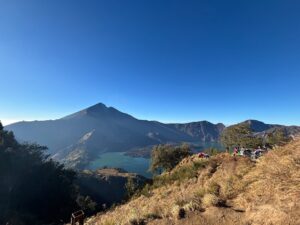
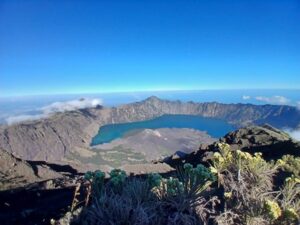
Mount Rinjani is famous for its dramatic volcanic landscape. At the center of the mountain complex is a large caldera containing Segara Anak Lake, a blue crater lake surrounded by steep volcanic walls. UNESCO describes the Rinjani volcanic complex as having a caldera of around 50 square kilometers. The landscape was strongly shaped by the historic Samalas eruption in 1257, while younger volcanic cones later developed inside the caldera.
During a Rinjani trek, hikers may experience several types of landscapes in one journey. Depending on the route, you can walk across wide grasslands, climb steep volcanic trails, camp above the clouds, and enjoy sunrise views over Lombok. This variety is one reason Mount Rinjani attracts hikers from Indonesia and around the world.
What Can You See During a Mount Rinjani Trek?
The experience depends on the trekking route and itinerary you choose, but several places are commonly associated with a Mount Rinjani adventure.
1. Rinjani Summit
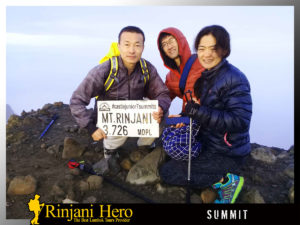
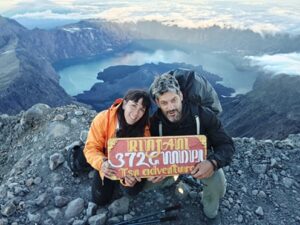
At 3,726 meters above sea level, the summit is the highest point of Mount Rinjani. Reaching it usually requires a demanding early morning climb over steep volcanic terrain. The final summit section can be physically challenging because of the loose surface, elevation, wind, and cold temperatures. For many trekkers, however, watching the sunrise from the upper slopes becomes the highlight of the journey.
2. Segara Anak Lake
Segara Anak is the crater lake inside the Rinjani caldera. Its name is often translated as “Child of the Sea,” referring to the lake’s striking blue appearance. Longer trekking programs may include a descent toward the lake before continuing to another campsite or trekking exit.
3. Crater Rim
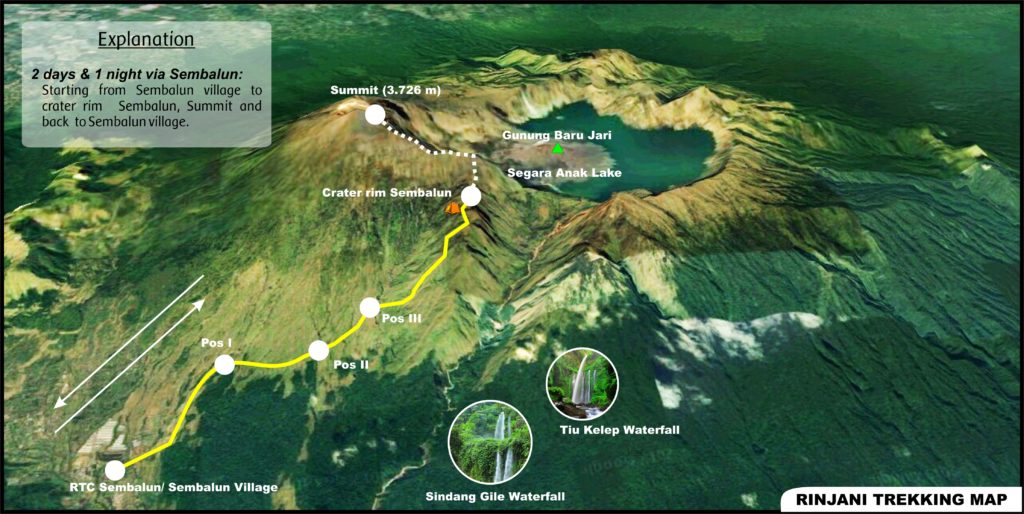
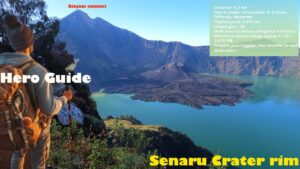
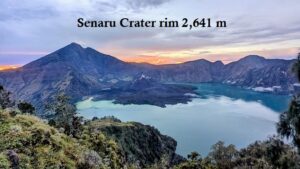
You do not always have to reach the summit to enjoy Rinjani. Several trekking itineraries focus on reaching a crater rim campsite, where hikers can enjoy panoramic views of the caldera, Segara Anak, surrounding mountains, and changing colors during sunset or sunrise. This can be an alternative for travelers who want the Rinjani camping experience without making the summit their main objective.
Where Does Mount Rinjani Trekking Start?
Mount Rinjani National Park has official trekking entrances, and the route you choose can significantly change the experience. Two names frequently associated with Rinjani trekking are Sembalun and Senaru.
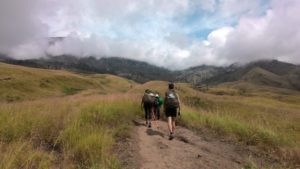
Sembalun is known for its open landscapes and is commonly used for trekking itineraries targeting the summit. The terrain starts relatively open before becoming progressively steeper toward the crater rim. Senaru, meanwhile, offers a different atmosphere, with greener forest landscapes along sections of the trail.
Some longer trekking programs combine different areas, allowing hikers to experience several sides of Mount Rinjani during one journey. Routes, quotas, weather conditions, and access regulations may change, so trekkers should always confirm the latest information before departure. The national park’s trekking procedures include official entry points, trekking quotas, online ticket booking, guides, porters, and equipment requirements.
How Difficult Is Mount Rinjani Trekking?
Mount Rinjani should not be underestimated. The difficulty depends on your itinerary. A crater rim trek is different from a multi-day program that includes the summit and Segara Anak Lake. If your itinerary includes the summit, expect long walking hours, significant elevation gain, steep sections, loose volcanic terrain, and cold conditions at higher elevations. You do not need to be a professional mountaineer, but good physical preparation is highly recommended. Before traveling to Lombok, exercises such as hiking, stair climbing, jogging, cycling, and leg-strength training can help prepare your body for the trek.
What Should You Prepare Before Trekking Mount Rinjani?
Preparation can make a major difference to your trekking experience. Bring suitable trekking shoes with good grip, comfortable hiking clothing, warm layers, a rain jacket, gloves, sun protection, a headlamp, personal medication, and enough water for sections where supplies are limited. Avoid bringing unnecessary items because additional weight can become increasingly uncomfortable during long climbs. You should also prepare mentally. Mountain conditions can change quickly, and reaching the summit should never be prioritized over personal safety. Following your guide’s instructions and understanding your own physical limits are important throughout the trek.
Do You Need a Guide for Mount Rinjani?
Using an experienced local trekking organizer can make planning considerably easier. A trekking service may assist with route planning, guides, porters, camping equipment, meals, transportation, and trekking administration depending on the package selected. Travelers who want to arrange a Mount Rinjani trekking experience can explore Rinjani Hero for trekking options and preparation information. Rinjani Hero is also included in the trekking organizer directory published on the official Mount Rinjani National Park website.
Is Mount Rinjani Worth Trekking?
For hikers who enjoy challenging mountain adventures, Mount Rinjani can be one of the most memorable experiences in Lombok. The combination of volcanic terrain, crater views, Segara Anak Lake, campsites above the clouds, and the possibility of reaching a 3,726-meter summit creates a trekking experience that is very different from a typical day hike. However, Rinjani is best enjoyed with realistic expectations. Choose an itinerary based on your fitness level rather than simply selecting the longest or most difficult program. With proper preparation, suitable equipment, and an experienced trekking team, exploring Mount Rinjani can become one of the highlights of a trip to Lombok.
Frequently Asked Questions
Is Mount Rinjani an active volcano?
Yes. Mount Rinjani is part of an active volcanic complex on Lombok Island. The Rinjani caldera also contains younger volcanic features that developed after earlier volcanic activity.
How high is Mount Rinjani?
Mount Rinjani reaches approximately 3,726 meters above sea level.
Can beginners trek Mount Rinjani?
Beginners with good fitness and proper preparation may choose suitable Rinjani trekking itineraries. However, summit programs are physically demanding, so travelers should select routes according to their experience and condition.
Do I need to reach the summit to enjoy Rinjani?
No. Crater rim trekking programs can still provide impressive views and an overnight mountain camping experience without requiring hikers to reach the summit.
Should I book Mount Rinjani trekking in advance?
Planning in advance is recommended because national park trekking uses official procedures and daily quotas can apply. Access can also be affected by weather, safety considerations, or park management decisions.