Knowing what to bring for Rinjani trekking is one of the most important parts of preparing for your Mount Rinjani adventure. The right packing list can make your hike more comfortable, safer, and more enjoyable, especially because the weather, terrain, and temperature can change quickly on the mountain.
At Rinjani Hero, we always remind our guests that Mount Rinjani is not just a simple walk. The trek can include long hiking hours, steep uphill sections, loose volcanic sand, cold nights, strong wind, forest trails, crater rim camping, and sometimes rain. That is why proper preparation matters before you start the journey.
You do not need to bring too many things, but you need to bring the right things. A smart packing list should focus on comfort, safety, warmth, sun protection, hydration, and personal essentials.
Why Packing Properly Matters for Mount Rinjani?
Mount Rinjani is a beautiful but challenging mountain. During the day, the trail can feel hot, especially on the open Sembalun route. At night, the temperature around the crater rim can feel very cold. If you continue to the summit, the early morning climb can be windy, dark, and physically demanding.
This is why our Mount Rinjani hiking tips always start with preparation. Good shoes help protect your feet. Warm layers help you sleep better at camp. A headlamp helps during the summit climb. A rain jacket protects you from sudden weather changes. Small personal items like medicine, sunscreen, and a dry bag can also make a big difference during the trek.
When you pack correctly, you can focus more on the experience: the sunrise, the crater lake, the hot spring, the forest, and the incredible views along the route.
Complete Rinjani Trekking Packing List
Below is our recommended packing list for hikers. You can adjust the list depending on your route, duration, fitness level, and package type.
| Category | What to Bring | Why It Matters |
|---|---|---|
| Footwear | Trekking shoes or hiking boots | For grip, ankle support, and comfort |
| Clothing | Quick dry shirts, trekking pants, warm jacket | For different temperatures and trail conditions |
| Rain Protection | Rain jacket or poncho | Weather can change quickly |
| Night Gear | Headlamp and spare batteries | Important for summit climb and camp |
| Sun Protection | Sunscreen, hat, sunglasses | Useful on open trails like Sembalun |
| Personal Items | Toiletries, tissue, wet wipes | For basic hygiene during the trek |
| Health | Personal medicine and small first aid kit | Important for personal safety |
| Hydration | Reusable water bottle | Helps you stay hydrated |
| Energy | Snacks or energy bars | Useful between meals |
| Storage | Dry bag or plastic bag | Keeps clothes and electronics dry |
| Power | Power bank | Useful because there is no charging point on the mountain |
| Extras | Trekking poles, gloves, beanie | Helpful for comfort and support |
1. Trekking Shoes or Hiking Boots
The first item we recommend is a good pair of trekking shoes or hiking boots. Your shoes should have strong grip, good support, and enough comfort for long walking hours.
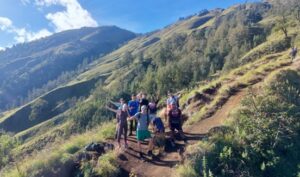
Mount Rinjani trails can include dirt paths, rocky sections, slippery forest areas, steep climbs, and loose volcanic sand. If your shoes are not comfortable, your feet can hurt quickly, especially during the descent.
We suggest wearing shoes that are already broken in before the trek. Do not use brand new shoes for the first time on Rinjani because they can cause blisters.
2. Quick Dry Clothing and Trekking Pants
For your hiking clothes, we recommend quick dry shirts and comfortable trekking pants. Avoid thick cotton clothing because it can absorb sweat and take longer to dry.
During the day, you may feel hot while walking. But when you reach the crater rim or campsite, the temperature can drop quickly. That is why layering is better than wearing one thick item.
A simple clothing setup can include:
- Quick dry trekking shirt
- Lightweight trekking pants
- Long sleeve layer for sun or cold protection
- Warm fleece or jacket
- Windproof outer layer
This setup helps you adjust your clothing based on the weather and altitude.
3. Warm Jacket, Gloves, and Beanie
Warm clothing is very important for Mount Rinjani. Nights at the crater rim can feel cold, and the summit climb usually starts early before sunrise. If you join a summit package, you may start hiking in the dark when the wind is strong and the temperature is low.
We recommend bringing a warm jacket, gloves, and a beanie. These items are small but very useful, especially during the summit push and while resting at camp.
For beginners, this is one of the most important things to know before hiking Rinjani: even though Lombok is tropical, the mountain area can feel very cold at night.
4. Rain Jacket or Poncho
Weather on Mount Rinjani can change quickly. Even during the trekking season, rain, fog, and strong wind can still happen. A rain jacket or poncho helps keep your body dry and warm.
We also recommend using a dry bag or plastic bag to protect your important items, such as your phone, passport, clothes, and electronics. Wet clothes can make the trek uncomfortable, especially at night.
5. Headlamp for the Summit Trek
A headlamp is one of the most important items if you join a summit trek. The summit climb usually starts before sunrise, so you will walk in the dark.
A headlamp is better than a handheld flashlight because it keeps your hands free. This is especially helpful when walking on steep or sandy terrain. Bring spare batteries if possible.
Even if you are not doing the summit, a headlamp is still useful at camp for moving around at night.
6. Sunscreen, Hat, and Sunglasses
Sun protection is important, especially on open routes like Sembalun. The savannah area can feel hot during the day because there is less shade compared to the Senaru forest route.
We recommend bringing sunscreen, a hat, and sunglasses. These items help protect your skin and eyes during long walking hours.
This is a simple but important part of our Mount Rinjani hiking tips, especially for hikers who are not used to strong tropical sun.
7. Personal Medicine and First Aid
We always suggest bringing your own personal medicine. Your body knows what it needs better than anyone else, so do not depend only on general supplies.
You can bring:
- Personal medication
- Pain relief medicine
- Blister plaster
- Motion sickness medicine if needed
- Small bandage
- Antiseptic wipes
- Any allergy medicine you normally use
If you have a medical condition, tell our team before the trek so we can understand your needs better.
8. Toiletries and Personal Hygiene Items
Facilities on the mountain are very basic. That is why you should bring small personal hygiene items.
Recommended items include:
- Toothbrush and small toothpaste
- Wet wipes
- Tissue
- Hand sanitizer
- Small towel
- Biodegradable soap if needed
- Personal sanitary products
Please avoid leaving trash on the mountain. We always encourage hikers to keep Mount Rinjani clean and respect the environment.
9. Reusable Water Bottle and Snacks
Hydration is very important during the trek. Bring a reusable water bottle so you can drink regularly while hiking.
You can also bring small snacks or energy bars. Our trekking package usually includes meals during the trip, but personal snacks can help when you need quick energy between meals.
Good snack options include:
- Energy bars
- Chocolate
- Nuts
- Dried fruit
- Biscuits
- Electrolyte powder
Do not bring too much. Keep it light and practical.
10. Power Bank and Camera
There is no regular charging point on the mountain, so a power bank is useful if you want to keep your phone or camera charged. Many hikers want to take photos at the crater rim, summit, lake, and hot spring.
If you bring a camera, make sure it is protected from dust, rain, and cold weather. A small dry bag can help protect your electronics.
11. Trekking Poles
Trekking poles are not always mandatory, but they are very useful. They can help reduce pressure on your knees, especially during long descents.
If you are joining a summit trek, trekking poles can also help with balance on loose volcanic sand. For beginners, trekking poles can make the hike feel more stable and comfortable.
What We Usually Provide in Our Trekking Package?
When you book a Mount Rinjani trekking package with us, our team helps prepare the main mountain logistics. Depending on the selected package, we may provide guide service, porter support, camping equipment, meals, drinking water, cooking equipment, tent, sleeping gear, and transport arrangement.
However, you still need to bring your personal items. Your personal packing list usually includes clothes, shoes, medicine, toiletries, headlamp, sunscreen, phone, power bank, and other personal needs.
Before the trek, we recommend confirming what is included in your package so you do not bring unnecessary items or forget important personal gear.
What Not to Bring for Rinjani Trekking?
Packing light is important. Do not bring too many unnecessary things because it can make your trek harder.
Avoid bringing:
- Large suitcase
- Too many clothes
- Heavy jeans
- Uncomfortable shoes
- Valuable jewelry
- Too many electronics
- Non essential heavy items
- Single use plastic items if possible
For personal belongings that you do not need on the mountain, you can usually leave them safely before the trek depending on your package arrangement.
Packing Tips for Beginners
If you are choosing a Mount Rinjani beginner friendly trek, your packing should be simple, light, and practical. Beginners often make the mistake of bringing too much. The goal is not to carry everything, but to carry what you really need.
Our beginner packing tips:
- Use comfortable trekking shoes
- Bring warm clothing for night
- Keep your daypack light
- Use quick dry clothing
- Separate dry and wet items
- Bring personal medicine
- Keep important items in a waterproof bag
- Do not overpack snacks
- Ask us what is already included in the package
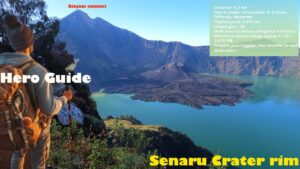
A beginner friendly route does not mean you can ignore preparation. Even the Senaru Crater Rim trek still requires stamina, proper shoes, and warm clothes.
Things to Know Before Hiking Rinjani
There are several things to know before hiking Rinjani. First, the mountain weather can change quickly. Second, the summit route is much harder than the crater rim route. Third, nights can be cold even if Lombok feels hot during the day.
You should also know that different routes need different preparation. Sembalun is more open and exposed to sun. Senaru has more forest and shade. Torean can be scenic but also narrow, exposed, and more adventurous in some sections.
If you are unsure which route to choose, talk to our team before booking. We can help recommend the route based on your fitness level, available time, and trekking goal.
How to Climb Mount Rinjani with Better Preparation?
If you are wondering how to climb Mount Rinjani more comfortably, the answer starts before the trek. Choose the right route, prepare your body, and pack properly.
For beginners, we usually recommend starting with a more realistic route, such as Senaru Crater Rim, instead of forcing a summit trek. If you want to reach the summit, we recommend training before the trip and choosing an itinerary that gives enough time for rest.
Good preparation includes:
- Training your legs before the trek
- Walking or hiking regularly
- Packing the right clothing
- Bringing proper shoes
- Staying hydrated
- Following your guide’s pace
- Sleeping enough before the trek
- Choosing the right package
A successful Rinjani trek is not only about reaching the destination. It is also about enjoying the journey safely.
Knowing what to bring for Rinjani trekking helps you enjoy the mountain with better comfort and confidence. You do not need to pack too much, but you need to bring the right essentials: good shoes, warm clothing, rain protection, headlamp, sunscreen, personal medicine, toiletries, water bottle, snacks, and power bank.
Feedback from TripAdvisor consistently shows that hikers who prepare well enjoy the trek more and are better able to appreciate the stunning scenery, sunrise views, Segara Anak Lake, and the overall Mount Rinjani experience.
At Rinjani Hero, we help our guests prepare for the trek by explaining the route, difficulty, package inclusion, and personal packing needs before the journey begins. Whether you choose a crater rim trek, lake route, summit package, or Mount Rinjani beginner friendly trek, proper packing will make your adventure safer and more enjoyable.
Book Your Rinjani Trek with Better Preparation
Need help choosing the right route and packing list? Contact our team at Rinjani Hero before booking. We can help you understand what to bring, what is included in the package, and which trek is most suitable for your fitness level.
Click the WhatsApp logo on our website to ask about Mount Rinjani trekking packages, beginner-friendly routes, summit options, and preparation tips.
FAQ About What to Bring for Rinjani Trekking
Do we need to bring our own tent for Rinjani trekking?
Usually, no. Most full-service trekking packages include camping equipment, but you should confirm this before booking.
Do we need hiking boots for Mount Rinjani?
Yes, we strongly recommend trekking shoes or hiking boots with good grip. The trail can be rocky, sandy, steep, and slippery.
Should beginners bring trekking poles?
Yes, trekking poles can help beginners with balance and reduce pressure on the knees, especially during descent.
Is a warm jacket necessary for Rinjani?
Yes. Nights at the crater rim and early morning summit climbs can feel very cold, so warm clothing is important.
Can we bring a suitcase to Mount Rinjani?
No. For the trek, bring only a small daypack with personal essentials. Large luggage should be left before the trek.
What should we bring for the summit climb?
For the summit climb, bring a headlamp, warm jacket, gloves, beanie, water, snacks, and comfortable trekking shoes.