Safest route to trekking to Mount Rinjani
The Senaru Trekking Route is the safest option for the 3-day Mount Rinjani summit program. Starting from Senaru Village and ending in Sembalun Village, this itinerary schedules the summit attempt for the final day, effectively minimizing extreme climbing risks. In this article, I will explain step-by-step why conquering the summit is much safer when starting from the Senaru Route.
Mount Rinjani, Indonesia’s most popular hiking destination, attracts numerous overseas visitors, particularly from Asia and Europe. However, it has seen a rise in accidents in recent years, ranging from minor to serious. This is largely influenced by the quality of guides, porters, and trekking organizers, as well as the specific trails and itineraries chosen.
Mount Rinjani safest route
Here is why the 3-day summit program via Senaru is the superior choice for safety and comfort:
- Streamlined Registration: The first day of the climb is much faster because the check-in process is simpler than in Sembalun. In Sembalun, the registration office is located about a 15-minute drive away, often resulting in long queues.
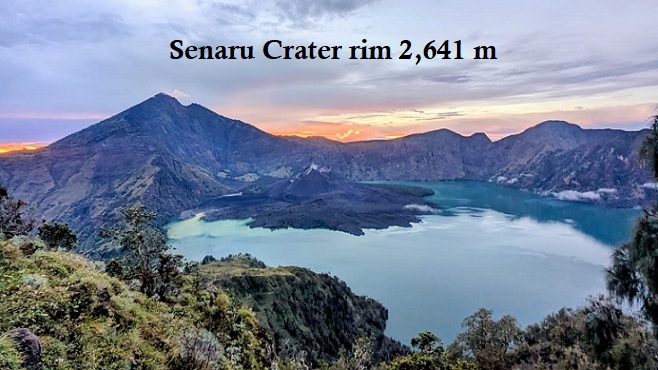
- Cooler and Shorter First Day: The trek begins inside a dense forest, shielding you from the scorching heat. This route is also shorter than Sembalun, allowing you to reach the campsite quicker. Once there, you will be rewarded with one of the most beautiful sunsets in Indonesia, overlooking the extraordinary combination of Lake Segara Anak and Mount Rinjani.
- The Ultimate Safety Advantage: The second day highlights why the Senaru route is much safer than Sembalun. Descending from the Senaru crater rim to the lake is highly secure because you are fully rested after a good night’s sleep. Conversely, on the Sembalun route, hikers are already exhausted on day two. They must wake up at 2:00 AM to summit Rinjani, return to camp, descend to the lake, and then climb back up to the Sembalun crater rim. This requires 13 to 14 hours of continuous trekking on severe sleep deprivation. Leg fatigue causes many hikers to slip on the steep terrain between the lake and Sembalun crater rim. By starting from Senaru, this risk is heavily mitigated; the trek from the Senaru rim to the Sembalun camping area takes only 6 to 7 hours. Additionally, you will have plenty of time to relax in the natural hot springs, enjoy the lake, or go fishing.
- On the third day, the summit push and the subsequent descent will take longer than the previous days. You will wake up at 2:00 AM for the summit attack and then head straight down to Sembalun Village. However, because the trail from the Pos 2 camping area lacks dangerous, steep, or rocky paths, the risk of fatal accidents is significantly reduced.
Senaru vs Sembalun route for better view
Which route offers a better view: Senaru or Sembalun? Ultimately, Senaru wins. This is because certain breathtaking moments can be missed on the Sembalun route due to daily weather conditions. For instance, the lake is often covered by thick fog or clouds during the day. When trekking from the lake up to Senaru, you might hit this cloudy window. Furthermore, on the Sembalun trail, you walk with your back facing the lake, meaning you constantly miss the scenery behind you. Hikers via Sembalun also frequently miss the sunset at the Senaru crater rim due to late arrivals. On the other hand, if you take the Senaru route, you can casually watch a spectacular sunset while enjoying dinner or appetizers with a warm cup of coffee. As for the summit view, it remains spectacular regardless of which route you choose
What are the disadvantages of the Senaru route compared to the Sembalun route?
On the third day, your trek will naturally end later because after conquering the summit, you must descend all the way to Sembalun Village. To address this, we provide a convenient solution: you can take a motorcycle taxi (ojek) from Pos 2 down to Sembalun Village, which saves you up to two hours of walking. That being said, our experience shows that hikers in good physical condition generally finish their trek early around 2:00 to 3:00 PM even without a motorcycle. Many climbers worry that this later finish might cause them to miss their next destination. However, speedboats to the Gili Islands operate on a flexible schedule