Rinjani Trails: Sembalun vs Senaru Route Map
Choosing the right trail for your Mount Rinjani expedition is a decision that dictates your daily scenery, physical challenges, and success rate in reaching the summit. The Rinjani National Park is primarily accessed through two iconic gateways: the Sembalun Route in the East and the Senaru Route in the North. While both lead to the majestic Segara Anak lake, they offer vastly different experiences that cater to different fitness levels and goals.
Whether you are looking for the most direct path to the 3,726m peak or a lush journey through a tropical rainforest, understanding the route map is essential. For over a decade, Rinjani Hero has been guiding international trekkers from Malaysia, Australia, and Europe through these distinct landscapes. As a legal provider established since 2012, they prioritize safety and nature preservation, ensuring that whether you choose the savannah or the jungle, your journey is supported by professional, English-speaking guides and a dedicated porter team.
The Sembalun Route: The High-Altitude Savannah
The Sembalun route is the preferred starting point for those whose main objective is the 3,726m summit. Starting at an altitude of 1,100m, this trail places you at a higher starting point than Senaru, saving you some vertical gain. The map for the first day involves crossing a vast, open landscape of rolling grasslands. While visually stunning, this route is known for being a bit hot during the crossing because there is very little shade from the sun.
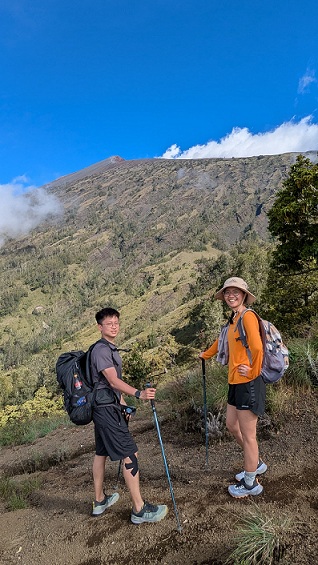 To reach the Sembalun Crater Rim at 2,600m, you must conquer five very high and challenging hills, famously known as the “7 Regret Hills.” This section requires significant stamina and physical fitness. However, the reward is immediate; the rim offers the most strategic basecamp for the midnight summit push. Most 4D/3N summit packages start here to allow hikers to tackle the most difficult part—the volcanic scree of the peak—while their energy is at its highest on the second day.
The Senaru Route: The Emerald Jungle
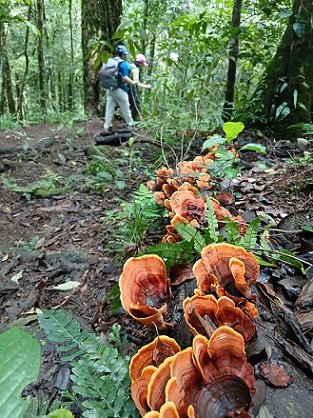 In contrast, the Senaru route is the “green lung” of the mountain. Starting at 600m, this trail takes you through a dense tropical rainforest that provides a cool, shaded environment for the majority of the climb. This route is often considered the most “pleasing” for beginners and families because it protects you from the direct heat of the sun. The ascent to the Senaru Crater Rim (2,641m) is steady and offers rich “informational gain” as you pass through protected forest areas.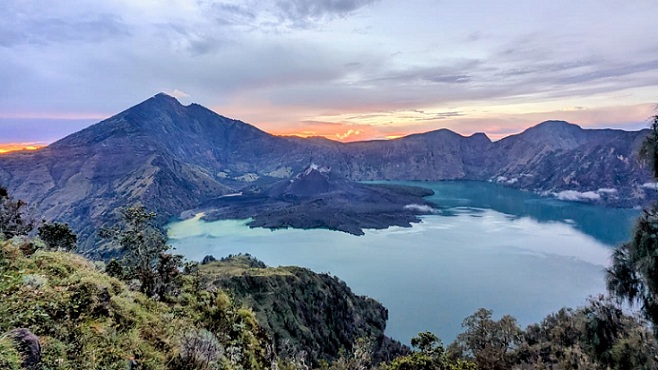
The Senaru Route Map is the standard for the 2-day trekking program, focusing on the spectacular views of the lake, the “New Volcano” (Baru Jari), and the Gili Islands in the distance. While you don’t reach the 3,726m summit on a standard 2-day Senaru trip, the sunset views from this rim are often cited as the most photogenic on the island. For many, the Senaru trail is the perfect way to experience the beauty of Rinjani without the extreme intensity of the Sembalun summit attack.
Comparing Logistics and Trail Selection
If you have a “good level of fitness” and a short amount of time, the 3-day loop—starting in Sembalun and ending in Senaru—is the best option. This allows you to “capture the moment” at the summit first, then descend to the lake and hot springs, and finally exit through the lush Senaru jungle. Professional providers like Rinjani Hero manage these complex logistics seamlessly, providing all camping gear, food, and drink, as well as transfers across Lombok.
Your choice should ultimately reflect your experience level. Sembalun is a struggle of endurance against the elements and altitude, while Senaru is a steady climb through a biodiversity hotspot. Both routes include essential services: local guides, porters who carry mountain tables and chairs, National Park fees, and trekking insurance. Whether you choose the private service for maximum comfort with your family or a standard group service, the goal remains the same: to conquer the second-highest mountain in Indonesia safely.
Frequently Asked Questions
Which route is better for a beginner?
The Senaru route to the Crater Rim (2D1N) is generally better for beginners. The forest canopy provides shade, making the temperature more manageable, and the trail is less dusty than Sembalun. However, if a beginner is fit and determined to reach the summit, the 4-day Sembalun route is a better option than the faster 3-day version.
Can I see the waterfalls from the Sembalun route?
The famous Sendang Gile and Tiu Kelep waterfalls are located in Senaru village. If you start your trek in Sembalun, you won’t see them during the hike. However, Rinjani Hero often includes a visit to these waterfalls as a “bonus” before or after the trek, especially for those staying in Senaru for their pre-trek accommodation.
Is the Torean route different from Senaru and Sembalun?
Yes, the Torean route is a third option that has become popular since 2021. It is often used as an exit route after the summit and lake. It is known as the “New Zealand of Indonesia” because of its dramatic valley and river views, but it is technically more challenging and longer than the standard Senaru exit.
Do I need different equipment for Sembalun vs Senaru?
The technical equipment remains the same. Regardless of the route, Rinjani Hero provides tents, sleeping bags, trekking poles, and headlamps. Your personal gear should always include a warm jacket, as both crater rims (Sembalun and Senaru) get very cold at night, regardless of the route you took to get there.