“The summit is what drives us, but the climb itself is what matters.” — Conrad Anker. What a great saying to talk about the reward after reaching the peak of a mountain. It is also true with one of the most renowned seven summits of Indonesia, none other than the Rinjani summit.
Calling out all trekking aficionados and nature lovers, Mount Rinjani offers the combo of iconic natural beauty, challenging adventures, diverse biodiversity, and more. Let’s see what Rinjani trekking programs will take you to the peak.
What Makes Rinjani Special?
Mount Rinjani indeed has its own unique charms, successfully attracting many curious mountaineers and other visitors to come. What makes it distinct?
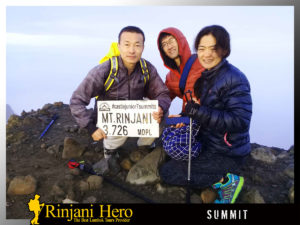
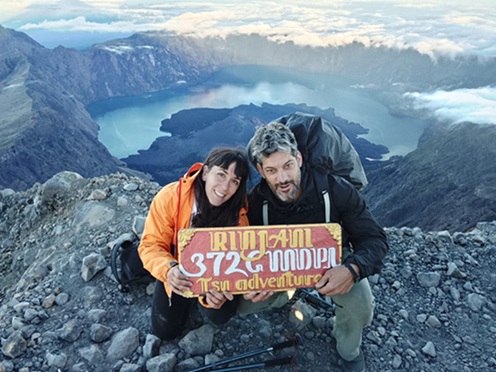
Standing majestically up to 3, 726 meters above sea level, its presence greatly dominates the landscape of relatively small Lombok Island. The highest point in West Nusa Tenggara Province, it is the second-tallest active volcano in Indonesia, only below Mount Kerinci in Sumatra.
Due to its magnificent height, the Rinjani summit makes its way into the list of the celebrated “Seven Summits of Indonesia.” The list refers to the highest peaks in seven primary islands and archipelagos. The entire list comprises Puncak Jaya in Papua, Kerinci in Sumatra, Rinjani in Lombok, Semeru in Java, Latimojong in Sulawesi, Binaiya in Maluku, and Bukit Raya in Kalimantan.
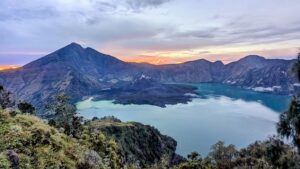
There is also a unique magical combo of Segara Anak Lake with its soothing blue-greenish water and Mount Barujari – the Child of Rinjani. The latter is a 2,376-meter active cinder cone volcano nestled within the expansive 8.5 km wide caldera of Mount Rinjani.
What is more? Along your iconic exploration, you will encounter vast grassland, lush rainforest, waterfalls, rivers, sunrise and sunset moments, and more. Also, Mount Rinjani is home to diverse biodiversity and cultural experiences, welcoming forest trekkers and nature enthusiasts.
The Sembalun Seven Summits
Named as one of the most popular trekking destinations in Southeast Asia, Mount Rinjani boasts its stunning trails and breathtaking natural beauty. As a part of the Rinjani National Park conservation area, the Rinjani summit stands alongside the so-called “Sembalun Seven Summits.”
Started in 2020, the Sembalun Seven Summits is an adventure tourism concept. It basically centers on a mountain climbing challenge to conquer the seven highest summits in the Sembalun region of East Lombok.
What are they? Including the Rinjani summit (3,726 m), the other Sembalun Seven Summits are Sempana (2,329 m), Lembah (2,200 m), Kondo (1,937 m), Anak Dara (1,923 m), Pergasingan (1,806 m), and Bao Ritip (1,500 m). Accordingly,
Rinjani Summit Trekking Preferences
Dry season is the best time for climbing Mount Rinjani, usually between April and December. The period offers the safest trails and the most favorable weather conditions. Accordingly, it is advisable to try trekking during the rainy season (January to March) since trails are more likely to be slippery and risky.
How long does Rinjani summit trekking take? It is probably the most frequent question asked.
Again, the answer will vary depending on the route you choose, level of difficulty, your physical condition, and how you plan to enjoy the journey. Still, the average climbing time ranges from 2 to 5 days.
Regarding Rinjani trekking routes, there are six official trails to the summit, namely Sembalun, Senaru, Torean, Timbanuh, Tete Batu, and Aik Berik. The first three are the most popular for most Rinjani summit trekking packages you can find.
There are different types of trekkers when it comes to how long it takes them to reach the summit. Some set the summit as their main goal and get to the top quickly. Some others prefer to enjoy every moment of the journey, which means taking a longer time.
The Short One
The 2-day 1-night Rinani summit trekking is worth considering if you are looking for a short hike. It is usually the case for several foreign trekkers who are able to finish the climb in two days.
Remember that this is not intended for beginners, as it will demand considerable physical stamina. The first day starts from Sembalun village (1100 m) as a starting point.
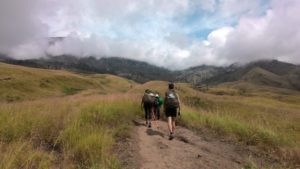
This route will pamper you with vast scenery, a somewhat lengthy path, and quite hot weather while passing the savanna. It requires considerable endurance to reach the crater rim (the camp area) at an elevation of 2,600 m. Also, you must hike five steep and challenging hills.
On the second day, you will take approximately 7 hours to reach the summit, starting usually from 2 a.m. After that, you will need to walk about 4 to 6 hours to return to your starting point village.
The Most Popular
3-Day 2-Night is the most popular trekking package to explore Mount Rinjani. You can choose Sembalun or Senaru as your trekking routes. After camping at Plawangan, you can execute the “summit attack” very early in the morning. You will take about 3 to 4 hours to the summit after following a steep sandy trail.
Or else, you can try the route that starts from Sembalun Village and spend overnight camping at the Sembalun crater rim. After reaching the summit, you can go camping the second night at Segara Anak Lake and end your trekking in Torean Village.
The Longer Ones
You can consider three options here: 3-Day 3-Night, 4-Day 3-Night, and 5-Day 4-Night trekking programs. In fact, most local hikers prefer this time duration as they can maintain their level of stamina.
Moreover, you can have more time to explore Mount Rinjani to the fullest. For example, apart from the crater rim and the lake, you can also experience the sunrises or sunsets, forest trekking, natural hot springs, and more.
Conclusion
Ascending Mount Rinjani is more than a physical trek; it is a spiritual adventure featuring breathtaking views and real tests. The summit attack is commonly the most challenging part. However, it is also the most rewarding at the same time.
So, are you ready to accept the challenge and conquer the highest point in Lombok Island? If you already know the Rinjani summit trekking programs you like, consider Rinjani Hero to find the best offer that suits your preferences.